Tuesday, November 4, 2008
Coming Out


Friday, October 31, 2008
Weeks End
1) Your work day is done and the brain is fried, what do you do?
Grab a Red Earth beer from the fridge and sit outside under the Camphor Laurel enjoying it. Then off to the gym for a bit of cycling and weights. Home/shower/into Peter Alexander jamies and read til bedtime.
2) Your work week is done and the brain is fried (for some Friday, others Sunday afternoon), what do you do?
Well tonight I attended the first Open Space at our church. Couple of pews turned around to face each other over a coffee table covered with contemplative writing. Table and seat in the foyer with opportunity to journal or to write a greeting card to someone. Lesson from the techy guys on how to dim the lights. Plenty of candles. Quiet (recorded) music and DVD of nature scenes playing on loop. Tea light candles to light and watch. A blessed hour with no words, women and men together yet each in silence. Minimal set up and pack down. Welcome space.
3) Like most of us, I often keep myself busy even while programs are on the tv. I stop to watch The Office and 30 Rock on Thursday nights. Do you have 'stop everything' tv programming or books or events or projects that are totally 'for you' moments?
TV is one of our shared family times. When I got home tonight, for example, watched end of 'Sweet Home Alabama' with daughter. 'Me' time is when I am driving alone. Can listen to ABC National radio or CD of my choice. IPod while walking is another way to stop and detach from 'troubles and needless anxieties'
4) When was the last time you laughed, really laughed? What was so funny?
I fell about laughing when I realised just what I had said one recent Saturday afternoon. "I'd rather spend time with you than do the vacuuming" So does that mean that I love his company just a little more than one of my most disliked chores? It wasn't meant to come out like that. I won't be allowed to forget it.
5) What is a fairly common item that some people are willing to go cheap on, but you are not.
Soap. I love handcrafted oil based soaps. Buy one or two every time I go to a market. (Modified overnight to add pyjamas and wine)
Bonus: It's become trite but is also true that we often benefit the most when we give. Go ahead, toot your own horn. When was the last time you gave until it felt good?
It felt like a lot of giving last Sunday leading all three worship services - I was exhausted at the end of the day but it felt good. The good feeling continues! Tonight one of the youth group said she had got the DVD of the sermon and was going to watch it with her boyfriend over the weekend (just in case you wondered what young people do with their time these days). And the 8 am people were just so thrilled that I chose four hymns (the Minister usually has only 3). It seemed like all the preparation was worthwhile.
In honour of Uncle Tom
 Another wonderful poetry invitation from Christine at Abbey of the Arts who posted this picture, taken during a trip to trace maternal ancestors. to inspire us to celebrate our ancestors, either as a group, or dedicated to a particular person (human or animal in nature).
The photograph is from Christine's invitation,
My great-uncle Thomas remained in Inverness when his parents and 12 siblings emigrated to New Zealand. Within a few years he was killed at Gallipoli. My grandparents named their first son after him, and that little one died in infancy. On a visit to Inverness I was stopped in my tracks and strangely moved when I saw his name on a wall plaque commemorating the men of Inverness, so many of them young men, who died in the first world war. I don't have a photograph.
I never met you
and I was moved to tears
when I saw your name
Lal remembered
her older brother always
and we heard stories
Thomas Gillanders
You were loved
You are remembered
You have family throughout this world
Rest in Peace
Sunday, October 26, 2008
Intelligent hearts: Hearty intelligence
Post-delivery version of a sermon for Reformation Sunday (apologies for the formatting which is a blogger gremlin that I can't seem to fix)
Let us pray: Living word, as we listen and learn together we pray that new light and truth will indeed break forth among us and set us free. Amen.
Last weekend we visited the excellent exhibition at the Penrith Regional Gallery in Emu Plains. Just across the
And there will be some reference today to some of our tipuna, our forebears, our ancestors in this tradition (accompanied by ppt slide of Katharina von Bora, Martin Luther et al).
The Reformation is usually dated to 31 October 1517 when Martin Luther, a priest, allegedly nailed his 95 theses to the door of
Other women and men joined this movement in the 16th century and continue to the present day to bring intellect and passion to their experience of faith in Jesus Christ. Idelette de Bure, who appeared on Belgian stamps much more recently, was married to the French theologian John Calvin, again in the 16th century. Charlotte von Kirschbaum was the faithful assistant to Karl Barth, living with his family, and contributed greatly to the 13 volumes of Church Dogmatics that are credited only to him. He acknowledges her very significant contribution in the preface, and publicly acknowledged that he could never have completed his work without his wife Nelly and his assistant 'Lollo'.
And like any family, this reformed tradition has some particular values. The majesty and sovereignty of God, the importance of the scriptures, and the love of God are three that we will focus on today.
“You shall be holy, for I the Lord your God am holy.” The book of Leviticus, or holiness code, contains many instructions for living. It is a record of the way the people of
The emphasis on God as wholly other, as totally different from humankind, is a key reformed value. Martin Luther objected to indulgences because they represented a claim that people could ‘buy God off’. We cannot presume or buy God’s favour. We cannot enlist God to our cause. We are “utterly dependent on an encounter with the divine for any understanding of ultimate reality. Barth saw the task of the church as that of proclaiming the "good word" of God and as serving as the "place of encounter" between God and mankind.”
Yet this wholly other God chooses to be revealed to us. Today we are gathered around the table and the font. The sacraments that are celebrated in this place are outward signs of inward grace. Baptism, as we celebrated last week, demonstrates powerfully that God first loved us. Many years ago now, friends of ours were mulling over whether or not their three-year-old daughter had the understanding to participate in communion. So they asked her. Her response was immediate “When I eat the bread God’s love goes right inside me.” Our forebear Calvin talked of the ‘real presence of Christ’ that we experience in the sacrament. Not necessarily some changing of the bread itself, or the juice. But in being set aside for a “sacred use and purpose” they do indeed become for us the body and blood of our Lord Jesus Christ.
Jesus Christ who said,“You will know the truth, and the truth will make you free”. That truth is contained in the Hebrew scriptures and the stories and letters of the early Christian church that make up our Bible. The
Jesus also said “… if the Son makes you free, you will be free indeed.” Our understanding of the word of God comes not only from text, but from the presence of Christ, the living word, among us. In Christ Jesus the word of God “became flesh and dwelt among us, full of grace and truth”. The reformed understanding is the word of God is the living Lord Jesus Christ, who sets us free.
The disciples were not slaves, and could not understand why Jesus said they would be free. We are not slaves, here in West Epping. We are free citizens, many of us property holders or in paid employment. The freedom that we have in Christ involves us as a community engaging with God’s mission. We are free from the forces that seek to control us, and free to live as citizens of the
There is a story about the theologian Karl Barth, author of 13 volumes of Church Dogmatics and often regarded as one of the best theologians of the past century. He was visiting the
Conviction about the mercy and justice of God also characterise our reformers. Their powerful intellects and passion for holy living can sometimes obscure our view of their humanity and experience of love. Calvin was once described as a brain without a personality. Yet these were women and men who integrated heart and intellect. Their experience of God’s love enabled joy through what Calvin called ‘troubles’ and helped them to put aside anxieties and needless worry. Troubles for Calvin were real life events, like the deaths of his three children, his only children, in infancy, and the death of his wife Idelette which affected him greatly. In a letter to a friend he said “Mine is no common grief. I have been bereaved of the best companion of my life.”(Bouwsma p.23). Their lives were not easy. Think for a moment of Katharina von Bora. She was placed in a convent at the age of three, when her mother died, and her father did not want to financially support a female child. She became a nun at the age of sixteen, with a personal faith but also note that there were very few options for a woman of her time, in her circumstances. Somehow the writings of that early reformation movement made their way into the convent. She was influenced so much by what she read that she left the convent with a group of nuns, and eventually married Martin Luther. He was 42 and she was 26. I wonder what it would have been like, with no real memory of family life yourself, to learn to love and to raise a family. To see two of your daughters die, and then your husband. Interestingly for a congregation with a strong Methodist teetotal background, this amazingly resourceful woman bought a farm and ran a brewery, raised three sons and her surviving daughter. Managed a household despite a husband who would generously and arguably carelessly give things away. Following Martin’s death, she experienced a financial crash and injuries in a carriage accident from which she never recovered. It is alleged that her last words referred to her commitment to the Christ who loved her "I will stick to Christ as a burr on a top coat." (a burr is one of those very sticky little plant seeds that get on your socks when you are out bushwalking)
This sense of and knowledge of God’s love is inextricably linked with the majesty and ‘wholly-other-ness’ of God. Recognition of our inadequacy is a necessary prerequisite to recognising that we are loved. Barth may have responded to the American student with great simplicity – but that simplicity was born of deep experience. He once said:
The Message translation of the Leviticus passage makes it clear that holy living is not a matter of spiritual thoughts and feelings alone. It is a matter of action. Let us listen again:
Be holy because I, God, your God, am holy.
Don't pervert justice. Don't show favouritism to either the poor or the great. Judge on the basis of what is right.
God’s justice, the justice system in which we are called to live, goes far beyond our human justice systems. It is about addressing the fundamental requirements of well-being, of full life, of salvation. The historic signing of a peace treaty in the highlands of
So in summary – some of the values that we inherit from the reformed tradition relate to who God is, the importance of the word of God, and God’s actions of mercy and justice in our world.
Our response: to live in that love and to stand against all that threatens that love. To know love and to know joy. The love and joy that come from knowing the grace of God, the truth of God’s word, and the life of God’s spirit.
A Mighty Stronghold Is Our God - Pipe Organ
Thanks Martin for a succinct summary of reformed theology - in the language of your time but still so relevant to ours
Saturday, October 25, 2008
Lollo - towards reformation II
 And what of you Lollo?
Charlotte von Kirschbaum
Theologian, quick-minded, hungry for truth
You gave yourself to this great enterprise
At the expense of your reputation
You know today some writers consider you were exploited
Used and abused by a man you looked up to and admired
Was that the way it was?
Or are you more abused by those who know no more than their limited imagination can conceive
Who cannot believe that a secretary can be a fellow theologian
The whisperers and critics
So keen to bring down a mind that threatened
That they would use you, his lifelong assistant
As a weapon
I like to think you'd like this quote - by a male theology graduate in that country of the USA where you visited with Karl so long ago
Let’s keep in mind that Nelly visited Charlotte on a very regular basis after Karl died... puts one in mind of a continuing and grand friendship. …. Adultery does not come to mind except by those who might be given to such things themselves.
Yours was a grand commitment
To ideals and knowledge and philosophy
Forsaking the frivolities that attract so readily
Living an unconventional lifestyle
Becoming part of a household
yet without a family of your own
To love and not to count the cost
To understand and to argue cogently
To have good times together
A life well-lived
A life lived well
Thanks for showing us how
Friday, October 24, 2008
Location Location Location
My daughter, her husband, and their toddler, Trinity Ann, are moving from Minneapolis, Minnesota to our place. It's a long story, but the short version is that they will be loading a Ryder truck on Saturday, and on Sunday afternoon we will unload it into a storage unit in our town. They will move themselves, their two cats and their BIG dog into our place. Yes, there will be issues, but this Friday Five isn't really about that. (Prayers for jobs for them and patience for all of us are most welcome, however.) This post is about locations. My husband has lived at 64 addresses in his life so far (16 with me) and he suggested the topic since we have moving trucks on our minds.
I'm up to 16 dwelling places as well. Each has memories and a special place in my heart. So the selection is somewhat random but here goes.

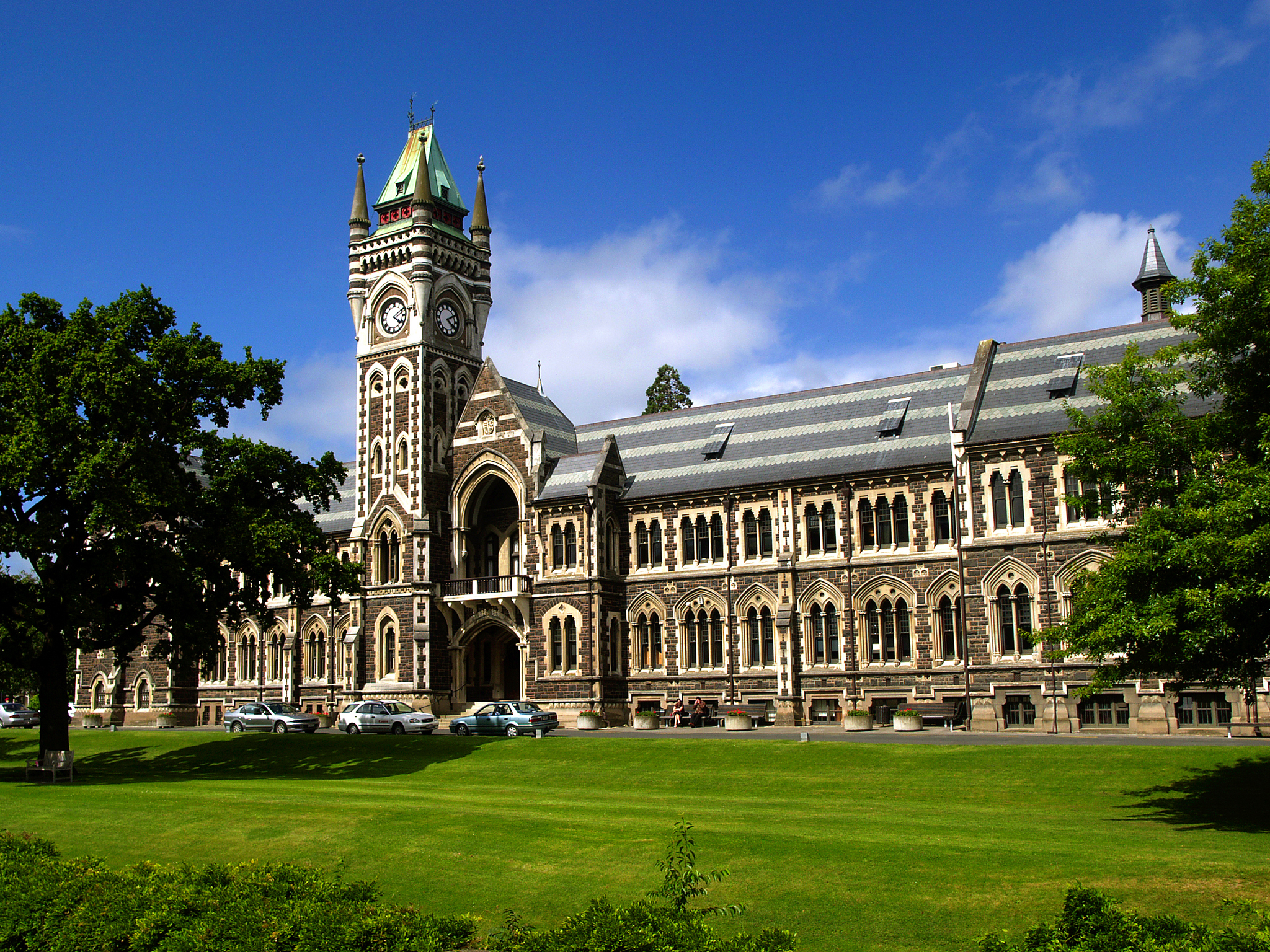
2. Dunedin. University city. It's hard to believe I moved so far from home at the same age as my youngest now. Lived in a hostel for a year, then boarding with a woman from the church I attended, then flatting with four other 'girls'. Lots happened there. Good and bad. Growing up!


 3. My first home purchase. In a provincial city. I've had a mortgage of one kind or another ever since. I just loved this little Hardyplank house. Decorated in pink and blue. With a garden full of indigenous trees and exotic flowers. Scene of many a pot luck tea with the 'sisterhood' and of a surprise party for my parents' 30th wedding anniversary. And I was completely smitten by a lovely guest who mowed my lawns. I've lived with him ever since as well.
no pic sorry - it was before the digital age :-)
4. Wanganui. Manse. Scene of 'courtship' and the first home we shared in our marriage. Bushwalks and drives up the River Road. The place where our children were born and brought home. A city of big-hearted and generous people. I was delighted when a work commitment took me back to speak on children's rights many years later. Those people are worth knowing.
 5. Sydney. I started with the first and will end with the most recent. This involved an international move. We brought our cat! The climate is generally very pleasant. We're back in a church house with the frustration of maintenance by committee. But they also paid for the landscaping which has provided an amazing back yard retreat. Last year was one of the most challenging I have had. Now settling into new workplace and routine it is beginning to feel like home.
